How AI Automation Is Transforming Businesses in 2026
How AI Automation Is Transforming Businesses in 2026
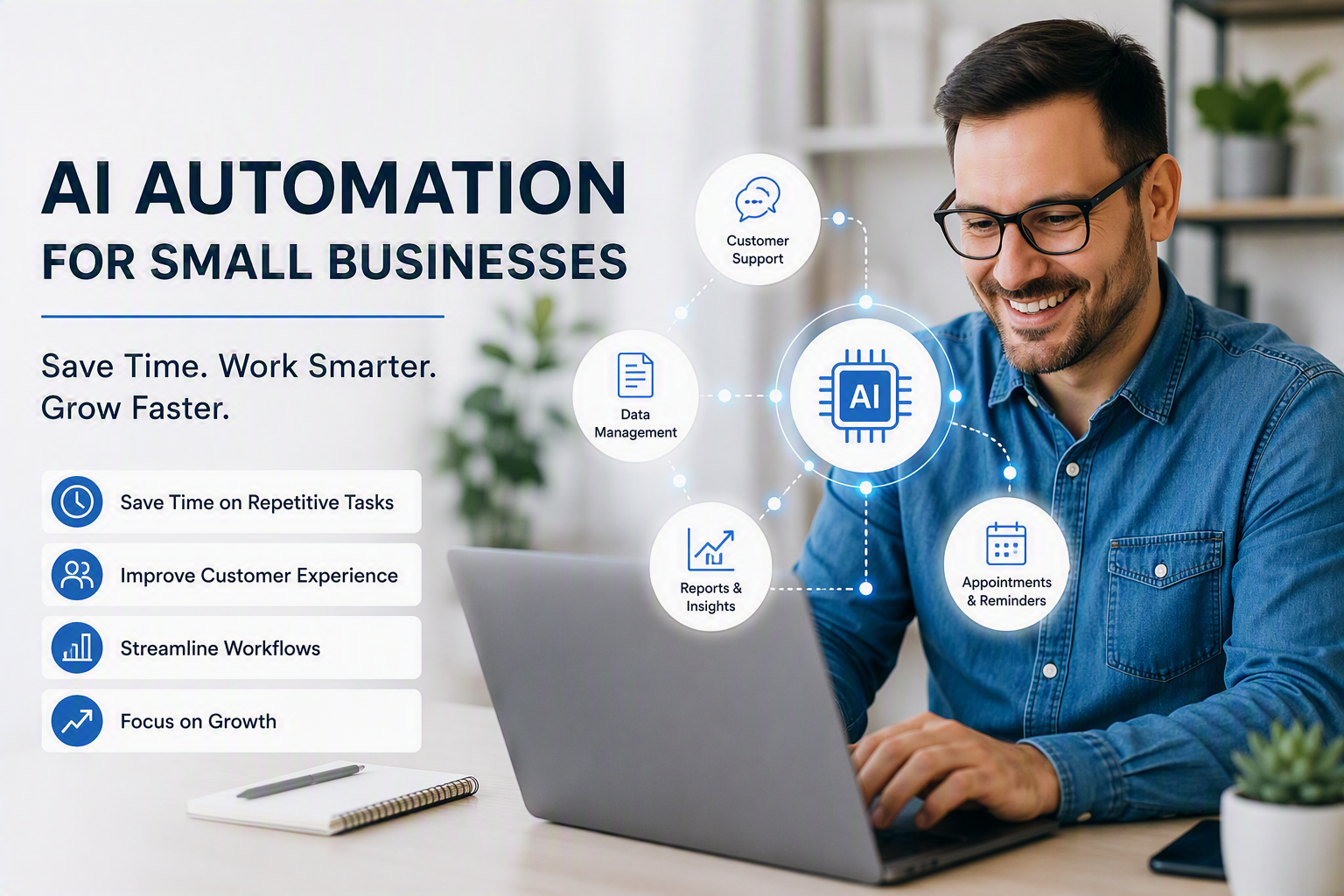
Artificial Intelligence (AI) and automation are no longer futuristic concepts. They have become essential tools that help businesses streamline operations, improve productivity, and deliver exceptional customer experiences. From small startups to large enterprises, organizations across industries are leveraging AI-powered solutions to stay competitive in an increasingly digital world.
What Is AI Automation?
AI automation combines artificial intelligence technologies with automated workflows to perform tasks that traditionally required human intervention. Unlike basic automation, AI systems can learn from data, recognize patterns, make decisions, and continuously improve over time.
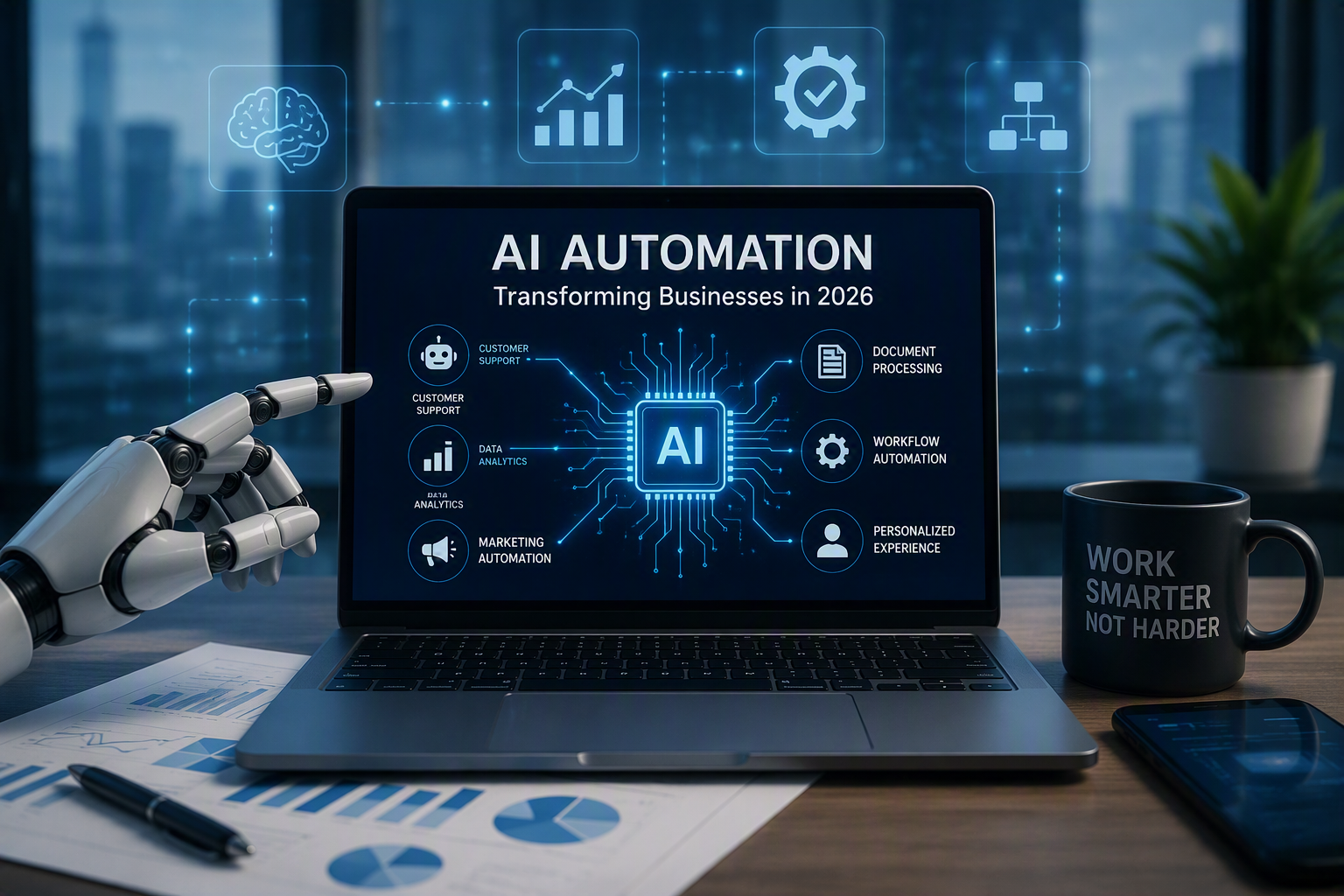
Examples of AI automation include:
- Customer support chatbots
- Automated data entry
- Predictive analytics
- Smart document processing
- Personalized marketing campaigns
- AI-powered virtual assistants
Key Benefits of AI Automation
1. Increased Productivity
AI can handle repetitive and time-consuming tasks around the clock, allowing employees to focus on strategic and creative work. This leads to higher efficiency and better resource utilization.
2. Reduced Operational Costs
By automating routine processes, businesses can significantly reduce labor costs, minimize errors, and optimize resource allocation.
3. Better Customer Experience
AI-powered chatbots and recommendation engines provide instant support and personalized experiences, helping businesses increase customer satisfaction and loyalty.
4. Improved Decision-Making
AI systems analyze large volumes of data in real time, providing actionable insights that support faster and more accurate business decisions.
5. Scalability
Automation enables organizations to handle growing workloads without proportionally increasing operational costs.
Real-World Applications
Customer Service
Modern AI chatbots can answer common questions, troubleshoot issues, and provide instant support, helping organizations improve response times and reduce support costs.
Marketing
AI helps marketers analyze customer behavior, segment audiences, and create highly targeted campaigns that generate better engagement and conversion rates.
Human Resources
Recruitment platforms use AI to screen resumes, schedule interviews, and identify qualified candidates more efficiently.
Finance
Organizations use AI for fraud detection, invoice processing, expense management, and financial forecasting.
Challenges to Consider
While AI automation offers substantial benefits, successful implementation requires careful planning. Businesses should consider:
- Data privacy and security
- Employee training and adoption
- Integration with existing systems
- Ethical AI practices
- Ongoing monitoring and optimization
Addressing these challenges early can help organizations maximize the value of their AI investments.
The Future of AI Automation
The future of business will be increasingly driven by intelligent automation. As AI technologies continue to evolve, organizations will gain access to more advanced capabilities such as autonomous workflows, predictive decision-making, and hyper-personalized customer experiences.
Businesses that adopt AI strategically today will be better positioned to innovate, grow, and compete in the years ahead.
Conclusion
AI automation is reshaping the way organizations operate. By improving efficiency, reducing costs, and enhancing customer experiences, AI has become a powerful driver of digital transformation. Whether you're a startup or an enterprise, embracing AI automation can unlock new opportunities for growth and long-term success.
Ready to start your AI journey? The best time to embrace intelligent automation is now.